Table of Contents
Learning the violin has a reputation for being challenging. Many aspiring musicians and parents ask, “is violin hard to learn?” The short answer is yes – the violin is often considered one of the hardest instruments to play. But that doesn’t mean it’s impossible or that you shouldn’t try! In this comprehensive guide, we’ll explore why violin is hard to learn, what makes it unique, and how beginners (including both adult learners and children) can overcome these challenges. So, is violin hard to learn? By understanding the difficulties and following expert tips, you’ll see that anyone with dedication can learn to play this beautiful instrument.
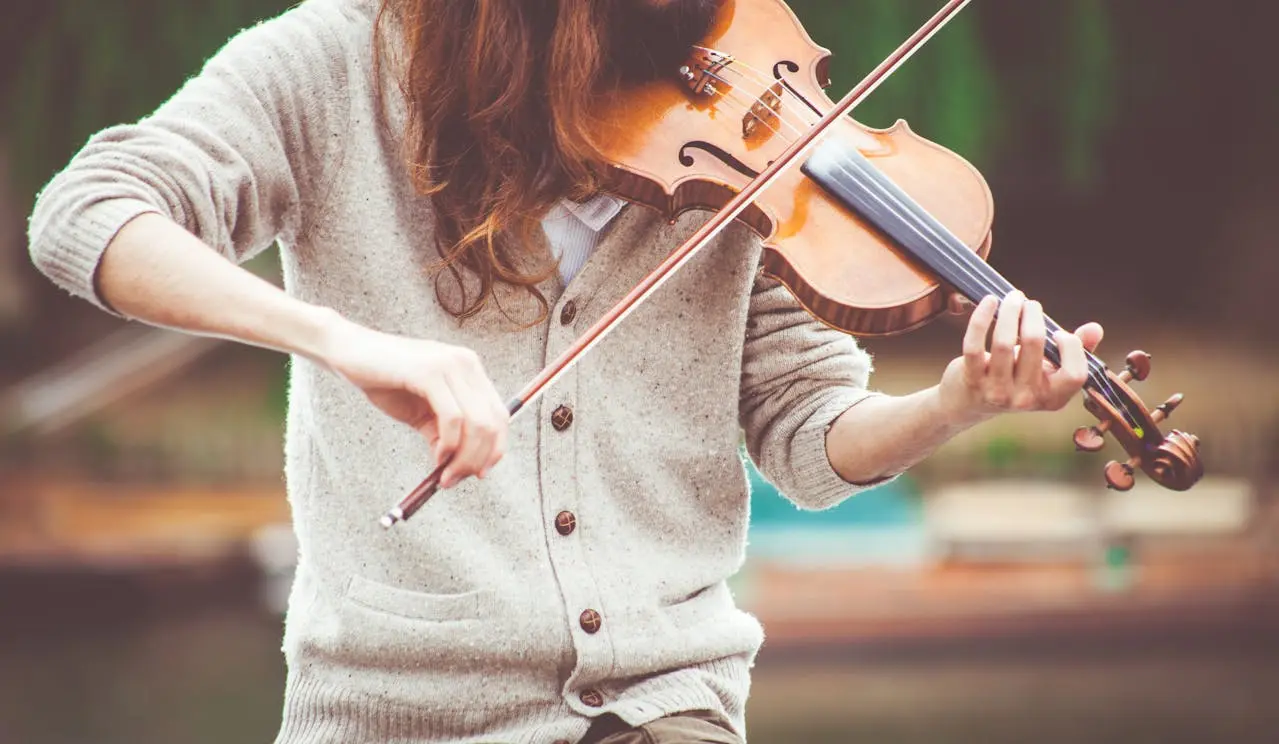
A close-up of a violin’s bridge and strings. Mastering the violin requires practice to overcome challenges like intonation and bowing technique.
Why Is Violin Hard to Learn?
Violin is regularly called one of the hardest instruments to learn for several reasons. Unlike a piano, where each key produces a perfect pitch, violin players have to find the right notes manually on a fretless fingerboard. Producing a pleasant sound on the violin also demands precise bowing technique and plenty of practice. Here are the key challenges that make learning violin difficult:
- No Frets for Guidance. On a guitar or piano, you have visual or tactile guides (frets or keys) to hit the correct notes. The violin’s fingerboard has no markers, so beginners must train their ear and muscle memory to land on the right pitch. Hitting the exact spot for each note within millimeters is crucial – slide a finger even slightly and the note goes out of tune. It’s no surprise intonation (playing in tune) is one of the biggest hurdles for new violinists. As professional violinist Taylor Davis notes, “the violin truly is one of the hardest instruments to play, especially in the early stages” because you have to precisely train your fingers to play in tune without any visual guides. This reliance on ear training makes violin hard to learn at first, though it ultimately helps develop strong listening skills.
- Difficult Bowing Technique and Tone Production. Simply getting a clean, pleasant sound from the violin can be tricky for beginners. Drawing a bow across the strings involves managing multiple variables: bow speed, pressure, and contact point (where the bow touches the string) all affect the tone. Use too much or too little pressure, or an imbalanced speed, and you’ll likely hear squeaks, scratches, or a whispery tone.
Early on, many beginners produce an “ear-splitting screech… like you’re sawing wood” until they learn proper bow control. Producing a good tone is one of the hardest parts of learning violin – it takes months (even years) of practice to bow smoothly. In fact, the violin has a steeper learning curve than many instruments because tone quality depends so much on the player’s technique (not just the instrument). The upside is that once you grasp the fundamentals, the violin can express a wide range of beautiful sounds unmatched by other instruments.
- Physical Demands and Posture. Holding and playing the violin is physically unnatural at first. Beginners must learn the correct posture – positioning the violin between the chin and shoulder, and holding the right arm up to bow. This can feel awkward and even uncomfortable. It takes arm and shoulder strength to practice for long periods. Your left hand fingers press down on metal strings, which can hurt until calluses develop. It’s common for new players to experience a stiff neck or sore muscles as they adjust.
As one violinist quipped, playing violin is “a test of muscular strength” – you’re holding up one arm and fingering with the other for extended periods. Proper setup (chin rests, shoulder rests) can help, but some discomfort is normal in the early stages. The key is to take breaks and avoid excessive tension. Experts advise that you shouldn’t feel real pain when playing – if you do, adjust your posture or gear. Over time, your body adapts and it gets easier.
- Coordination Between Hands. Violin playing requires doing different things with each hand simultaneously. Your left hand fingers must find notes with precision, while your right hand controls the bow to produce sound. This hand-eye-ear coordination is a lot to manage. A beginner’s left hand might struggle with finger placement and stretching, while the right hand might have trouble keeping the bow straight.
Doing both at once is challenging. As one adult learner explained, the left hand and right arm are “all moving at the same time to create a tone” – a coordination task that can initially feel like patting your head and rubbing your stomach. It simply takes practice for your brain and muscles to sync these actions. Start with basic exercises (open string bowing, simple scales) to train each hand separately before combining them. With time, your coordination will improve.
- Lots of Technique and Patience Required. The violin has a rich repertoire of techniques (various bow strokes, vibrato, shifting to higher positions, etc.) that take years to master. Beginners are often focused just on producing clean notes, but eventually you’ll encounter advanced techniques that add complexity. Mastering violin is a long-term journey – there are no shortcuts. You need consistent practice and patience. It may be months before you can play a simple tune nicely, and potentially years to sound intermediate. This slow progress can be frustrating.
A contributor on a music forum noted that each person’s journey is unique, but it typically takes years of dedicated practice to reach an intermediate level on violin. Even then, professional violinists continue to practice daily to maintain their skills. The violin’s difficulty teaches you humility; as the saying goes, “anything worth learning is also hard”. The good news is that every violinist, even the greats, started as a squeaky beginner. With time, consistent practice, and possibly some lessons, you will improve.
Is Violin Hard to Learn? – Common Challenges
| Challenge | What it looks like | Do this now | Daily drill | Gear/Setup tip |
| Intonation (playing in tune) | Notes sound slightly sharp/flat | Add removable finger tapes; play slowly | 5 mins: one-string scales with tuner drone | Low-tension strings; proper left-hand thumb relaxed |
| Scratchy or weak tone | Squeaks, airy sound | Use slower bow near middle; lighten pressure | 5 mins: long open-string bows (8–10 sec each) | Fresh rosin; bow hair not over-tight; contact point midway |
| Bow not straight | Tone wobbles; hits other strings | Practice in front of mirror; guide along imaginary line | 3 mins: “railroad” open-string bows watching mirror | Balance bow hold; elbow height matches string |
| Hand coordination | Left hand late/early vs bow | Separate hands: left pizzicato, right open-strings | 5 mins: slow scales hands together with metronome | Comfortable shoulder rest; relaxed right wrist |
| Posture & tension | Sore neck/shoulder; raised shoulders | Reset: drop shoulders, soft hands, breathe | Micro-breaks every 10–15 mins; gentle stretches | Fit chinrest/shoulder rest to you; violin angled slightly left |
| String crossings | Unwanted double stops/squeaks | Move from elbow, tiny angle changes | 3 mins: open-string crossing patterns (e.g., D–A–D–A) | Keep bow near balance point for control |
| Rhythm & tempo | Rushing/dragging | Use click at slow tempo; count aloud | 3 mins: clapping rhythms, then bow them on open strings | Set metronome slightly below comfort, step up gradually |
| Shifting & vibrato (later) | Slides miss target; wobble uneven | Map target notes, pause on them; slow vibrato waves | 5 mins: guide-finger shifts; vibrato in slow motion | Left thumb light; finger pads rounded, not flat |
| Motivation & consistency | Infrequent practice; plateau | Tiny goals (one bar clean), track wins | Daily 10–20 mins focused blocks; rotate topics | Keep 1 “fun piece” in rotation to reward progress |
FAQ: Is Violin Hard to Learn?
Is violin hard to learn?
Yes – mainly at the start. No frets and bow control make it tricky, but after a few steady months the basics click and progress speeds up.
How long until I can play real songs?
With daily short practice, expect simple tunes in 2-3 months, solid basics in 6-12 months, and early-intermediate pieces in 2-3 years. Everyone varies.
Am I too old to start?
No. Adults learn well with consistent, bite-size practice. Mind tension, use good setup, and you can join community groups within a year or two.
Can I learn without a teacher?
You can, but feedback saves time. Do 4-8 starter lessons to lock posture and bow hold, then use online courses/apps between occasional check-ins.
Why does my violin sound scratchy?
Usually bow issues or tuning. Tune first, add rosin, keep the bow straight, use slow long bows at mid-bow, relax the right hand, and aim for a steady contact point.
In summary, is violin hard to learn? Yes – especially at the beginning. Intonation and tone production present steep challenges, and the instrument demands physical adaptation and perseverance. However, acknowledging these hurdles is the first step to overcoming them. The very things that make violin hard to learn also make it amazing: you have immense control over pitch and expression, more than on many other instruments. Once you get past the initial learning curve, the violin’s difficulty turns into its allure.